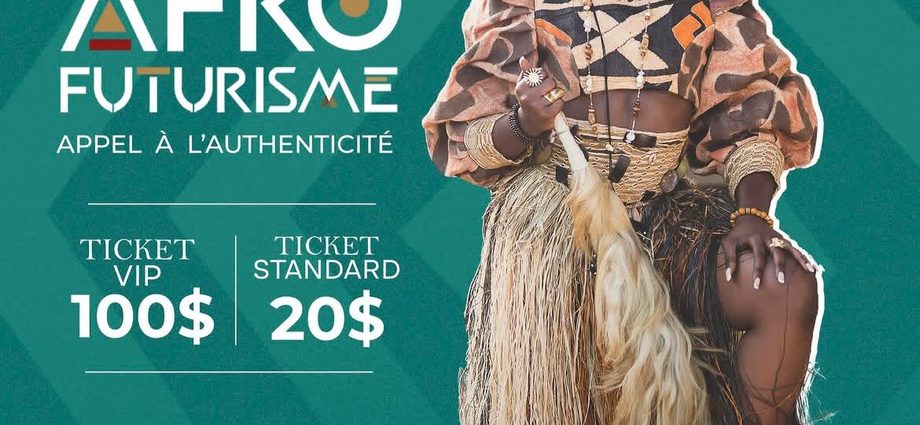
In Lubumbashi, the fifth edition of Fashion Week brings together Congolese heritage, local materials and Afrofuturism. The 2026 edition aims to make fashion creation a space for cultural transmission, professional training and creative experimentation.
From September 14 to 19, 2026, Lubumbashi Fashion Week places Congolese identity at the heart of its fifth edition. Kuba raffia, wood, natural fibres, craftsmanship and traditional know-how will be combined with a contemporary and futuristic vision of fashion.
In Lubumbashi, Fashion Looks at Its Heritage Differently
The fifth edition of Lubumbashi Fashion Week takes place from September 14 to 19, 2026, with an approach that combines a return to cultural roots with a projection toward the future.
Held in Lubumbashi, the capital of Haut-Katanga in southeastern Democratic Republic of the Congo, the event aims to give a central role to Congolese identity and its reinterpretation through contemporary fashion.
According to the Congolese Press Agency (ACP), citing Guershom Nanukila, one of the organizers, this edition encourages designers to reconnect with the roots of Congolese identity and reinterpret heritage through a vision that is “contemporary, authentic and futuristic.”
This approach gives Fashion Week a dimension that goes beyond the presentation of collections. It positions cultural references and local resources as starting points for a new language of fashion.
Kuba Raffia and Local Materials at the Heart of Creation
One of the key focuses of the 2026 edition is the promotion of Congolese craftsmanship, traditional know-how and locally sourced materials.
The programme specifically highlights Kuba raffia, wood and natural fibres, alongside other resources from the local environment. For the organizers, incorporating these materials into contemporary fashion encourages reflection on how heritage can contribute to modern creative practices.
This approach is particularly relevant in a context where traditional materials and techniques can provide designers with new forms of creative expression while maintaining strong links with local knowledge and craftsmanship.
Guershom Nanukila describes the event as “a true laboratory of styles,” where imagination becomes a driver of development and fashion is viewed as a vehicle for cultural sovereignty.
A Fashion Week Combining Creation and Cultural Transmission
The programme announced for the event extends beyond the runway.
Throughout the week, training workshops focused on entrepreneurship, craftsmanship and creative practices are expected to bring together designers, artisans and entrepreneurs.
Collective exhibitions are also planned to showcase their works, products and initiatives. By combining training, exhibitions and fashion shows, the event takes on a professional dimension, bringing together different stakeholders within the creative ecosystem.
The programme also includes a major fashion show dedicated to designers’ interpretations of Afrofuturism. The movement therefore becomes an aesthetic framework for exploring the meeting point between cultural heritage and visions of the future.
From Congolese Identity to an Afrofuturist Vision
The choice of Afrofuturism as the central theme of the main fashion show reinforces the organizers’ desire to move beyond the traditional opposition between heritage and modernity.
For this edition, Congolese heritage is instead approached as a creative resource that can be transformed, reinterpreted and projected into new fashion narratives.
This approach also gives Fashion Week a broader cultural dimension. Fashion becomes a way of exploring representations of Congolese identity while creating space for a new generation of designers.
Lubumbashi as a Creative Hub
Lubumbashi Fashion Week is being held at the Academy of Fine Arts and the French Institute of Lubumbashi, which will host the various activities announced for the event.
For its fifth edition, Lubumbashi becomes a platform where fashion, craftsmanship, entrepreneurship, training and artistic expression converge around one central question: How can Congolese fashion identity evolve without breaking its connection with the traditional skills and materials that shape it?
The organizers’ answer lies in creating a dialogue between heritage and the future, with Afrofuturism serving as a space for experimentation.
This approach places the 2026 edition within a broader reflection on the ability of Congolese fashion to transform its cultural heritage into new creative propositions, while strengthening the role of local materials, craftsmanship and emerging designers in the country’s creative economy.