Fact Sheet: Adebayo Oke-Lawal and Orange Culture
Adebayo Oke-Lawal
Founder and creative director of Orange Culture
Country of origin: Nigeria
Documented base of operations: Lagos, Nigeria
Brand launch: 2011, according to the LVMH Prize profile
Sector: Contemporary fashion
Specialty: Menswear, fluid silhouettes, androgynous aesthetics and African-inspired prints
Education: Finance at the University of Lagos, then a master’s degree in international business at Northumbria University, according to Business of Fashion.
Official information from Orange Culture, together with the Business of Fashion and LVMH Prize profiles, makes it possible to confirm the main elements of this career path. The brand brings together Nigerian references, contemporary silhouettes and a reflection on representations of masculinity. In 2014, it was selected as a semi-finalist for the LVMH Prize, an important step in its international visibility.
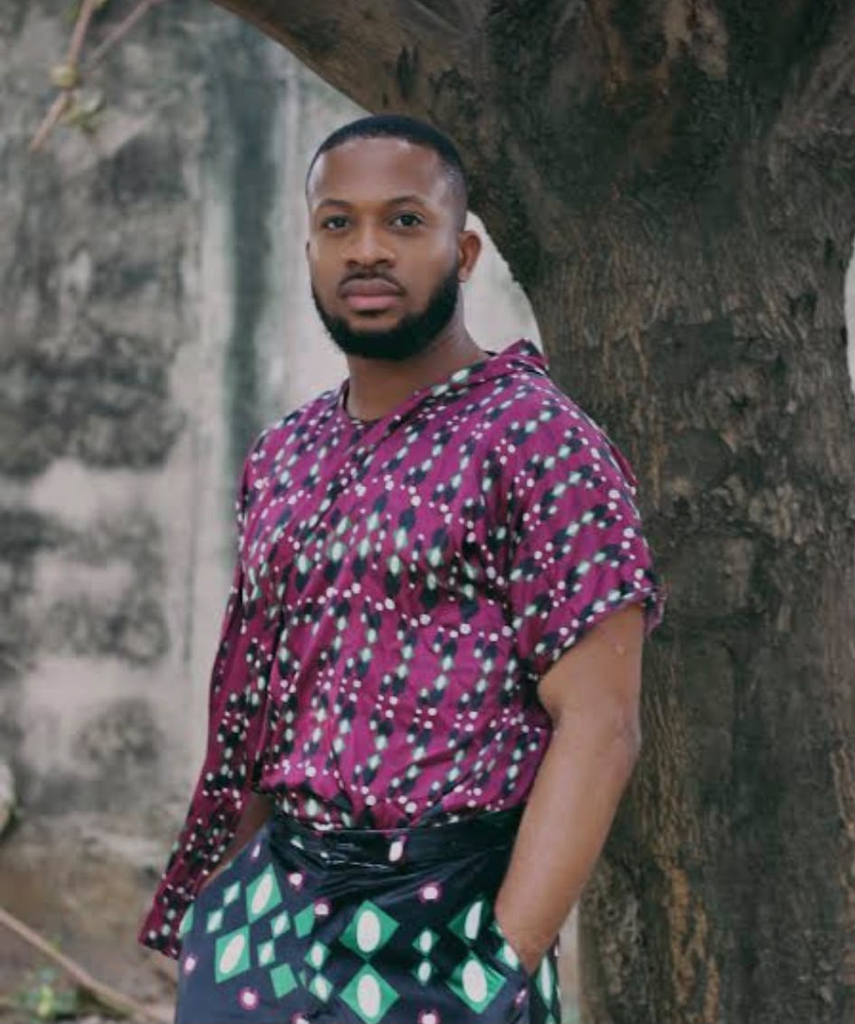
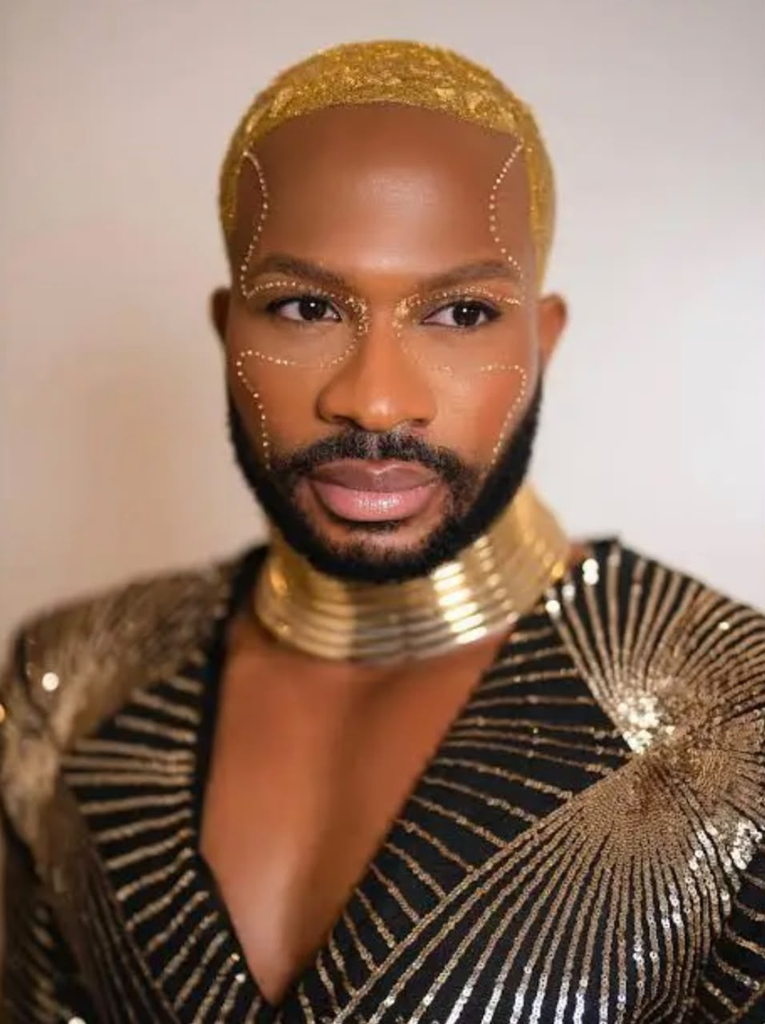
Orange Culture sets Nigerian clothing references in dialogue with a contemporary aesthetic that questions the conventions of menswear.
The starting point: a designer who wanted to tell more than the story of clothes
In contemporary African fashion, some trajectories stand out less for a search for spectacular aesthetics than for a determination to shift the boundaries of what clothes can represent. Adebayo Oke-Lawal’s belongs to this category.
Originally from Nigeria, the designer is the founder and creative director of Orange Culture, a Lagos-based brand. His career is marked by a desire to challenge the conventions attached to men’s dress, while making African cultural references a structuring component of his creative language.
According to the profile published by the LVMH Prize, Oke-Lawal has been drawing since the age of ten. Before officially launching his brand, he also took an interest in writing and styling, and worked with designers, actors, music artists and magazines. These experiences helped build a perspective that is not limited to designing clothes.
His university education in finance, then in international business, is another element of his background. It reflects a path that combines creative sensitivity with training in management and the commercial environment, without allowing us to directly deduce from it the drivers of his entrepreneurial success.
It was in 2011 that Orange Culture officially entered the fashion industry. The brand does not simply present itself as a new ready-to-wear proposition: it aims to develop a universe in which clothes become a way of telling experiences, identities and social realities.
The spark: making fashion a personal language
The idea behind Orange Culture is rooted in particular in a reflection on the social judgments attached to tastes, behaviors and individual expression.
In an interview published by The Folklore in July 2021, Adebayo Oke-Lawal explains that he wanted to create a brand that goes beyond ordinary categories of clothing, to carry stories that resemble him and address subjects that matter to him.
The name Orange Culture is itself tied to this approach. In an older interview published by The Lifestyle Spread, the designer mentions a text titled The Orange Boy, devoted to people judged differently because of their interests, particularly when those interests depart from the expectations traditionally placed on boys.
This origin sheds light on the brand’s philosophy. The aim is not only to offer original pieces, but to question the norms that determine what a man is expected to wear, show or conceal.
Oke-Lawal sums up this ambition by describing Orange Culture as a “movement” rather than a simple clothing line. This expression, echoed in his presentation by the LVMH Prize, conveys an intention: to create a space where clothing supports self-expression without being entirely subject to social conventions.
The first steps: building an identity from Lagos
Launching a fashion brand means turning a creative vision into an activity capable of producing, selling and lasting. In the case of Orange Culture, Lagos is the anchor of this endeavor.
The brand took its first steps in the early 2010s, in an environment where Nigerian designers were seeking to develop distinctive identities while gaining visibility on international stages.
Oke-Lawal’s first projects include collections such as Summer Quirks. An interview published in October 2012 by Renaissance Men already refers to this collection and its approach to menswear. This documentary trace makes it possible to situate the brand’s early activity, without claiming to reconstruct its first budgets, sales or production capacity.
In an interview published by The Lifestyle Spread in 2012, the designer also recounts having left his previous professional environment to launch Orange Culture with very limited means. This account sheds light on his perception of the early days, but it is not an independent financial assessment of the company’s creation.
From this period on, the project stood out for its choice not to simply reproduce conventional masculine silhouettes. Colors, prints and proportions contribute to an aesthetic that combines local references with contemporary urban influences.
Its identity is thus built on a twofold movement: taking a place in a global fashion industry while keeping a creative voice rooted in the Nigerian experience.
The 2014 turning point: the LVMH Prize as a visibility accelerator
Orange Culture’s selection as a semi-finalist for the LVMH Prize in 2014 is one of the best-documented stages of its journey.
The prize’s official profile presents Oke-Lawal as a Nigerian designer seeking to make his brand known beyond its home market. It notably highlights the meeting of classic and contemporary silhouettes, African sensibility, prints and urban clothing.
It is important, however, to distinguish the nature of this recognition: Orange Culture is indeed listed as a semi-finalist of the LVMH Prize 2014. This selection does not mean that the brand won the prize.
Its significance is nonetheless considerable. Such visibility allows a designer to come onto the radar of international fashion players, whether journalists, stylists, retailers or industry professionals.
According to the Business of Fashion profile of Oke-Lawal, the brand subsequently attracted the attention of fashion editors and stylists, then secured points of sale with retailers such as Browns, Farfetch, Temple Muse, The Folklore and Merchants on Long.
These references document the existence of commercial outlets beyond Lagos. They do not, however, establish that all of these retailers still carry the brand’s collections today.
An aesthetic that challenges the codes of masculinity
Orange Culture’s singularity lies first in its clothing language.
The brand combines structured or relaxed silhouettes with bold colors, prints and proportions that sometimes depart from the conventions of the traditional men’s wardrobe. It also develops pieces whose aesthetic lends itself to a more fluid expression of gender.
Business of Fashion describes this approach as a meeting of Nigerian and African references, universal streetwear silhouettes and unexpected textile choices. The brand offers men’s and women’s collections that blur the conventional boundaries between the two categories.
This orientation is not only a stylistic stance. It is part of a reflection on how clothing contributes to the representation of masculinity.
In an interview given to the Czech edition of Vogue, Oke-Lawal notably recalls the experiences of rejection and the social expectations he faced while growing up. He defends the idea that there is no single legitimate way of being a man.
Fashion thus becomes a means of making visible identities and sensibilities that do not always find their place in dominant representations of the men’s wardrobe.
It would nevertheless be reductive to limit Orange Culture to androgyny alone. The brand’s identity also rests on color, storytelling, prints, cultural references and the desire to produce clothes with an emotional dimension.
The Nigerian anchor: a creative resource, not just an identity argument
The African dimension of Orange Culture shows up concretely in the work on silhouettes, the choice of materials and the integration of Nigerian references into contemporary clothing.
The brand does not seek to literally reproduce traditional outfits. Rather, it draws on certain elements of African clothing heritage and creation and sets them in dialogue with the international codes of ready-to-wear and streetwear.
This approach avoids a simplistic opposition between tradition and modernity. Cultural references are not presented as fixed elements: they become creative resources that can be reinterpreted and circulated in different contexts.
In an interview published by The Folklore in 2021, the platform states that the brand’s pieces are made from locally produced fabrics sourced from supply chains presented as ethical. It also mentions the work of artisans trained to contribute to the quality of the garments.
These elements offer indications about the brand’s creative and production organization. They should, however, be considered information published by a commercial partner platform, not the conclusions of an independent audit of its entire supply chain.
Likewise, while a commitment to more responsible practices is part of the discourse associated with Orange Culture, the sources consulted do not provide enough data to precisely measure its environmental footprint, its emissions or the exact share of certified materials in its collections.
The interest of this approach therefore lies as much in the way Nigerian references are mobilized as in the question of local production and the place given to know-how.
The Davido collaboration and commercial visibility
One of Orange Culture’s most notable collaborations is the one with Davido, a leading Nigerian artist.
According to the Business of Fashion profile and the brand’s official presentation, Oke-Lawal designed a limited-edition collection with the artist, sold exclusively at Selfridges, the British department store.
This operation illustrates an important mechanism in the development of a fashion brand: the meeting of clothing design, the music industry and visibility among a wider audience.
A collaboration with an artist allows a brand’s identity to circulate beyond its usual channels. It can also strengthen its association with a cultural universe, a fan community or a particular moment in contemporary creation.
In Orange Culture’s case, this collaboration is part of a broader strategy of bringing fashion, art and popular culture closer together. Business of Fashion also mentions collaborations with Budweiser, Dennis Osadebe, Rokus London and other players.
However, financial effects that are not documented should not be automatically attributed to these operations. The sources consulted give neither the revenue generated by the Davido collection, nor the volumes sold, nor the commercial terms of the agreement.
What can be retained is more precise: the collaboration is an identifiable achievement in the brand’s journey and an example of how Orange Culture has linked Nigerian creation, music culture and international distribution.
The Orange Mentorship: passing on what he had to learn
Oke-Lawal’s career is not limited to producing collections. It also includes an initiative to pass on knowledge to young fashion talent.
The Orange Mentorship was designed to bring aspiring designers closer to experienced industry professionals. Its stated goal is to facilitate access to practical knowledge about creating and developing a brand, notably production, commercial launch, factories, logistics and the realities of the profession.
In an interview published by BusinessDay on April 24, 2021, Oke-Lawal explains that he wanted to create this platform because he himself had lacked information and access to certain know-how when he was starting out.
The program adapted during the Covid-19 pandemic by incorporating digital and hybrid formats. According to the designer, this evolution made participation easier and broadened the possibilities for transmission.
BusinessDay also reports that the program involved professionals and designers from the Nigerian industry, including Omoyemi Akerele, Mai Atafo, Andrea Iyamah and other figures.
This initiative addresses a key question for African creative industries: how can individual success be turned into resources accessible to other entrepreneurs?
Access to technical skills, professional networks and commercial knowledge is a decisive step for young brands. Mentorship does not replace funding or production infrastructure, but it can help reduce obstacles linked to a lack of information and support.
The real impact of The Orange Mentorship nevertheless remains difficult to quantify from the sources consulted. No recent consolidated assessment made it possible to establish the total number of participants, their entrepreneurial survival rate or the jobs created following the program.
Distribution and internationalization: the limits of visibility
The development of Orange Culture highlights an important distinction between media recognition and commercial consolidation.
The brand has been featured in international media, has taken part in fashion events and has benefited from points of sale outside Nigeria. Its Business of Fashion profile notably mentions Browns, Farfetch and Merchants on Long, while the brand reports presentations in London and New York.
These elements show an ability to circulate a Nigerian creative proposition in several spaces of the global fashion industry.
They are not enough, however, to demonstrate continuous commercial expansion in each of the markets concerned. A fashion week presentation, a magazine feature and permanent distribution are three different realities.
To measure the economic solidity of this internationalization, additional information would be needed on sales by market, the frequency of collections, the distribution partners still active, production capacity and investments.
This distinction is essential for understanding the challenges facing contemporary African brands. International visibility can be a lever for development, but it must be accompanied by a suitable commercial and production organization to become sustainable growth.
Where is Orange Culture today?
The brand still has an official website presenting its collections and product categories, notably shirts, trousers, jackets, coats, suits and womenswear. Its site also highlights its creative identity and its Nigerian references.
The Business of Fashion profile of Adebayo Oke-Lawal also documents his recognition within the BoF 500, the editorial ranking of the people who shape the global fashion industry. The brand also indicates that the designer joined this selection in 2022.
These elements confirm the continuity of the brand’s institutional and digital presence, but not an exhaustive picture of its commercial operations as of October 2026.
The public information consulted does not make it possible to confirm with sufficient precision current headcount, revenues, production capacity, the latest sales figures or all the points of sale that are still active.
Looking ahead, the challenge is therefore to distinguish the strength of the creative identity, which is widely documented, from the economic indicators that would allow the company’s trajectory to be assessed with greater precision.
Tomorrow: turning a creative vision into a professional legacy
Adebayo Oke-Lawal’s journey invites us to move beyond a conception of success limited to a designer’s fame.
Orange Culture has built a recognizable identity, gained international visibility and developed a mentorship initiative that responds to an identified need in the fashion ecosystem. These three dimensions — creation, commercial circulation and transmission — make it possible to read his trajectory from an entrepreneurial as well as a cultural angle.
The brand’s future will depend in particular on its ability to preserve its identity, maintain its commercial outlets and make its production model viable in a highly competitive sector. It will also depend on the possibility of documenting its results and the impact of its initiatives more fully.
No recent, sufficiently documented quantified objective was identified in the sources consulted that would allow us to state that a specific expansion or a new commercial project is officially planned.
Oke-Lawal’s most clearly identifiable contribution lies elsewhere: having made menswear a space for reflection on social norms, while placing his work within an international conversation on contemporary African creation.
For Orange Culture, the question is therefore not only how far a Nigerian brand can be visible. It is also to understand how a singular creative identity can sustain itself, be passed on and find its place in an evolving global industry.
Afrikashion Data
Orange Culture
Contemporary fashion brand · Nigeria
Founder: Adebayo Oke-Lawal
Year of launch: 2011
Base: Lagos, Nigeria
Sector: Fashion and creative industries
Specialty: contemporary silhouettes, menswear and womenswear, an androgynous approach and Nigerian-inspired prints.
Positioning: contemporary creation combining individual expression, cultural references and a challenge to traditional dress codes.
Documented markets: Nigeria and the international commercial circuits mentioned in the Business of Fashion profile.
Key achievements: semi-finalist of the LVMH Prize 2014; collaboration with Davido; participation in international fashion events; creation of The Orange Mentorship; presence in the BoF 500.
The distribution markets cited in historical sources do not confirm an active commercial presence in 2026.
Five dates to remember
- 2011 — Launch of Orange Culture. Adebayo Oke-Lawal launches his brand and begins developing a proposition that combines Nigerian references, color and contemporary silhouettes.
- 2014 — Semi-finalist for the LVMH Prize. The selection brings the brand recognition within the international landscape of young designers.
- 2017 — Collaboration with Davido. The brand develops a limited-edition collection with the Nigerian artist, sold at Selfridges.
- 2021 — Mentorship in the spotlight. BusinessDay publishes an interview on The Orange Mentorship and the designer’s desire to give young talent access to professional knowledge.
- 2022 — Entry into the BoF 500. Adebayo Oke-Lawal appears in Business of Fashion’s selection of influential figures in the global fashion industry.
Five figures to remember
2011 Year of launch. The official start of the brand, according to the LVMH Prize.
2014 LVMH Prize selection. The year it was named a semi-finalist.
10 years A decade of creation in 2021. Length of activity cited by The Folklore on the occasion of the brand’s tenth anniversary.
2021 Reference year for the mentorship. BusinessDay documents the program and its adaptation to digital formats during the pandemic.
2022 Entry into the BoF 500. The year indicated by the brand for this Business of Fashion recognition.
Editorial note: these figures are chronological markers, not financial indicators or measures of impact.
The Afrikashion Eye
Orange Culture’s journey illustrates an important evolution in contemporary African fashion: the ability of designers based on the continent to develop distinctive aesthetic identities while entering international circuits of recognition and distribution. The brand also shows that clothing can be a vehicle for social reflection, beyond its commercial function. But visibility is not enough to measure the solidity of a business. Sales, jobs, production capacity and the durability of partnerships remain indispensable indicators for assessing its real economic development.