
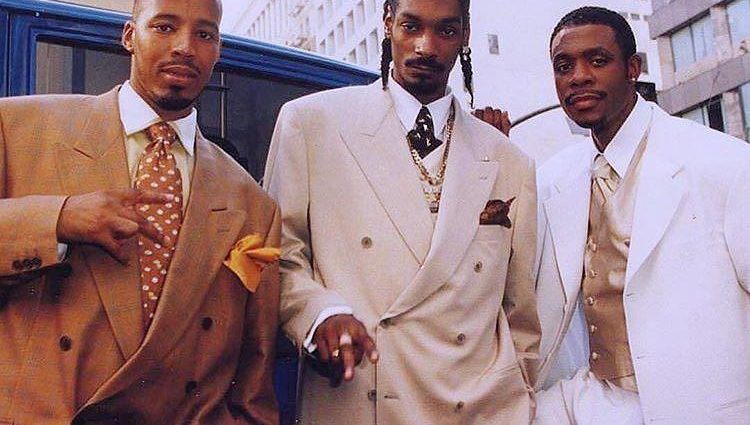
The same size can suit two people and still fall completely differently on each. When it comes to style, the label never tells the whole story. What truly makes the difference is often found in how the garment is constructed: the proportions, the volumes, the fabric and, above all, the way the cut converses with the body.
You’ve certainly been in this situation: a jacket in your size, but with shoulders that are too wide, sleeves that are too long, or a waist that seems oddly placed. And then, conversely, a very simple piece that, once worn, immediately gives an elegant allure.
This paradox sums up an essential rule of styling: a beautiful piece is not necessarily a well-cut piece.
The label indicates a size. It guarantees neither good proportions, nor suitable construction, nor a harmonious drape.
Before the size, look at the cut
When buying a garment, the first reflex is often to look for your size.
36, 38, 40, M, L, XL…
Yet a commercial size is only a reference point. It doesn’t precisely describe the proportions of a body and can vary considerably from one brand, country or model to another.
Two people wearing the same size can have very different shoulders, chests, waists, arms or hips.
That is why a stylist’s or pattern-maker’s eye never stops at the label.
They observe the shoulders, the waistline, the lengths, the ease, the drape of the fabric, the proportions between the upper and lower body, and the way the garment accompanies movement.
So the real question isn’t just: “What size do I wear?”
But rather:
“How is this piece constructed for my body?”
The shoulders: the true starting point
For a jacket, a blazer, a structured shirt or a constructed dress, the shoulders are among the first things to look at.
The seam must align with the natural line of the shoulder.
Too far down the arm, it can make the garment look too big. Too far inside, it can create tension and disrupt the hang of the sleeves.
This matters especially when you choose a larger size solely to gain ease at the chest or hips.
A tailor can easily shorten a sleeve or slightly take in a waist. Correctly modifying the structure of a shoulder, however, is far more complex.
The professional’s eye therefore often starts there: shoulders before size.
The waistline: a question of proportions
On a fitted dress, a jacket or a blouse, the position of the waist can completely change how the silhouette is perceived.
A higher waist can visually lengthen the legs. A lower line produces a different balance.
There is, however, no universally perfect position.
It all depends on the style, the body’s proportions and the effect you want.
So when you try on a fitted piece, don’t just ask yourself whether it closes.
Look at where the garment decides to place your waist.
It’s often a discreet detail, but its visual impact is considerable.
A sleeve that’s too long can change an entire silhouette
The sleeve seems like a detail.
It isn’t.
A sleeve that’s too long can weigh down a jacket and give an impression of carelessness. A sleeve that’s too short can, conversely, make the garment look too small.
But here again, context matters.
A deliberately shortened sleeve can be a stylistic choice. A longer sleeve can be part of a contemporary silhouette.
So the question isn’t:
“Is it long or short?”
But:
“Is it consistent with the style and the look I’m after?”
Fitted doesn’t mean tight
This is one of the most common confusions.
A well-cut garment can follow the lines of the body without compressing it.
Ease is essential: it lets you breathe, walk, sit, raise your arms and simply live in your clothes.
It depends on many factors: the fabric, the construction, the intended use of the garment, the volume desired, or even the climate.
A ceremonial jacket won’t be built like a shirt meant to be worn all day. Suit trousers don’t necessarily have the same ease as fluid trousers.
The best test is ultimately very simple:
move.
Raise your arms. Sit down. Walk. Cross your arms. Breathe normally.
A garment can look magnificent in front of a mirror and become completely different as soon as the body starts living in it.
The fabric is part of the cut, too
Two garments built from a similar pattern can look very different.
Why?
Because every textile has its own behavior.
A fluid fabric follows movement. A stiff material builds the silhouette more. A thick textile adds volume. A light material creates softness.
The cut can therefore never be fully separated from the material.
This is particularly important in African fashion, where textile diversity is considerable.
Wax, bazin, bogolan, indigo, woven pagnes and other artisanal textiles don’t all react in the same way.
The textile draws the eye; the cut organizes the silhouette.
It is their dialogue that creates the final result.
Same size, different bodies
Imagine two women who both wear a size 40.
They share a sizing category, but that doesn’t mean they have the same proportions.
One may have a longer torso, broader shoulders, long arms and pronounced hips.
The other may have a shorter torso, narrower shoulders and a different distribution of volume.
They can wear the same size and yet need different constructions.
This is precisely why a label should never become a judgment on the body.
A size that doesn’t fit you doesn’t mean your body is the problem.
It may simply be that the garment wasn’t built for your proportions.
This nuance can completely transform the way we shop.
And if the garment is made to measure?
Made-to-measure offers more possibilities, but it doesn’t automatically guarantee a perfect cut.
Taking measurements must go hand in hand with a genuine understanding of the style and the intended use of the garment.
When ordering a piece from a tailor or dressmaker, it helps to specify:
- the intended use;
- the desired level of ease;
- the movements required;
- the length you want;
- the volume you want;
- the aesthetic effect you expect.
And whenever possible, a fitting before finishing remains essential.
A small correction made at that stage can considerably change the final result.
A good cut can transform an ordinary piece
Take a white shirt.
On a hanger, it may look perfectly ordinary.
But if the shoulders are well placed, the neckline is suitable, the chest has enough ease, the sleeves hang correctly and the fabric has the right level of fluidity, that same shirt can become a particularly elegant piece.
This is one of the great lessons of styling:
elegance doesn’t always come from complexity.
It often comes from rightness.
A simple, perfectly proportioned piece can have more presence than a spectacular but poorly constructed garment.
Oversize needs structure too
Even roomy silhouettes follow this rule.
Oversize doesn’t simply mean going up several sizes.
Wide trousers paired with a voluminous jacket create a very different silhouette from loose trousers worn with a closer-fitting top.
The volume must be organized.
This is especially visible in contemporary tailoring: shoulders, lengths, trouser width and waist position must work together.
Oversize is a construction, not a sizing error.
With African textiles, the cut matters even more
Textiles with a strong visual identity can give a silhouette a lot of character.
But a powerful print will never automatically make up for poor construction.
With a wax, a bogolan, a bazin, an indigo or a woven pagne, the cut must dialogue with the pattern, the weight and the behavior of the textile.
A minimalist cut can let a highly expressive fabric take its full place.
Conversely, a more discreet material can support a more architectural construction.
This is where the work of the stylist and pattern-maker becomes so important: it’s not only about choosing a beautiful fabric, but about knowing what that fabric can become.
Smart shopping: looking like a professional
Next time you try on a garment, don’t just ask yourself whether it’s beautiful.
Ask yourself a few simple questions:
Are the shoulders well positioned?
Is the waistline consistent with the style?
Can I move freely?
Are the sleeves right?
Does the fabric fall naturally?
Does the length work with my proportions?
Can this piece fit into several outfits in my wardrobe?
And above all:
Is this really a size problem, or a cut problem?
This last question can save you many unnecessary purchases.
Can alterations solve everything?
No.
A hem, a sleeve to shorten, a slight taking-in of the waist or certain simple adjustments can transform a piece.
But not every modification is possible.
Poorly constructed shoulders, a badly designed armhole or inadequate overall proportions can be much harder to correct.
Before buying a piece while telling yourself “I’ll have it altered,” ask yourself whether the alteration is truly reasonable.
Sometimes, the best alteration is simply… to choose another piece.
Afrikashion’s advice
An elegant wardrobe isn’t necessarily the one that holds the most clothes.
It’s often the one in which the right cuts, the right materials and the right proportions work together.
Fashion isn’t only about following a trend or finding your size.
It’s also about understanding how a garment is constructed and how that construction converses with the body.
So the next time a piece doesn’t suit you, don’t conclude too quickly that it’s “not made for you.”
Observe.
The shoulders.
The waist.
The sleeves.
The length.
The ease.
The fabric.
The movement.
Because the perfect garment may not exist.
But the right cut can make all the difference.
The advisor’s eye
Size is an indication.
Cut is a construction.
Proportions create harmony.
And allure is the result.