
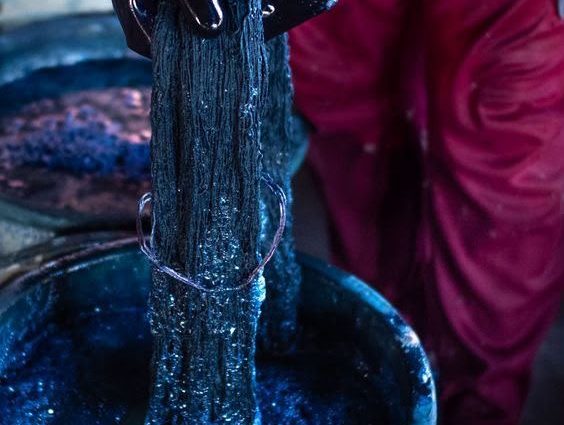
Before it was a fashion color, indigo was a craftsmanship. From the Senegal River Valley to Mali, and from northern Nigeria to the Yoruba regions, its production gave rise to some of the most remarkable textile traditions in West Africa. Dyeing with indigo is not just about coloring a fabric: it means mastering a plant-based material, a dye vat, resist techniques, and sometimes a whole language of patterns.
There are shades of blue that are immediately recognizable.
A deep, rich blue, sometimes almost black, crisscrossed with white patterns. A blue that appears on a tied wrapper, a ceremonial garment, a strip-woven cloth, or a piece of àdìrẹ.
That blue is indigo.
In West Africa, indigo belongs to an ancient and exceptionally diverse textile history. Collections at the Metropolitan Museum of Art attest to indigo textile traditions and resist-dyeing techniques in Senegal, the Gambia, Ghana, Nigeria, and Cameroon.
However, speaking of “African indigo” as a single tradition would be misleading.
The plants used, the processes, the patterns, the uses, and the artisans varied from one society to another.
Indigo is therefore a color shared by several heritage traditions, rather than a single heritage in itself.
AT THE ORIGINS: A MEETING BETWEEN PLANT AND TEXTILE
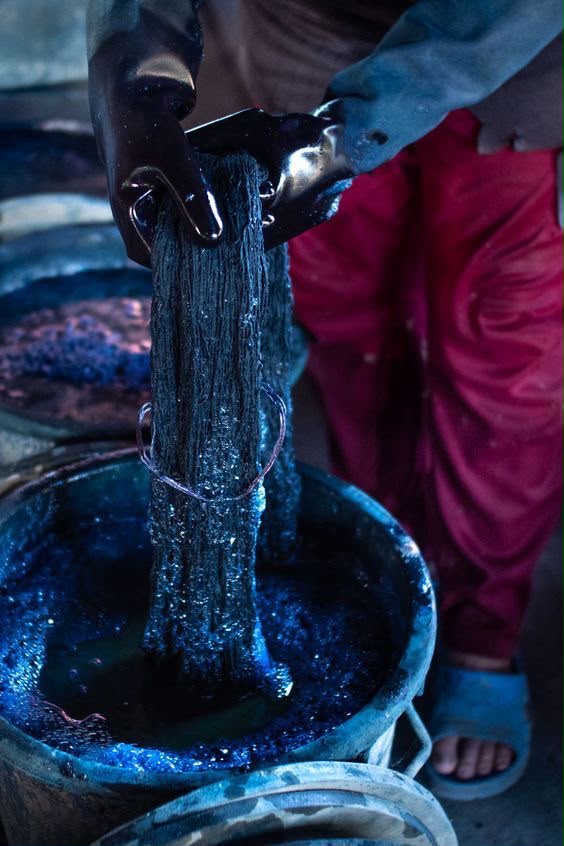
Before becoming a dye, indigo is a plant.
The leaves of dye-producing plants are harvested and then processed using techniques that extract the coloring substance.
This transformation requires precise knowledge of:
- the plant;
- its stage of maturity;
- fermentation;
- the alkalinity of the bath;
- temperature;
- aeration;
- timing;
- the proportions of the various ingredients.
In certain West African traditions, the plant material was shaped into balls or dried preparations before being added to the vat. However, processes varied considerably from region to region.
The final result depended as much on the plant as it did on the dyer’s expertise.
ÀDÌRẸ: THE GREAT INDIGO HERITAGE OF THE YORUBA
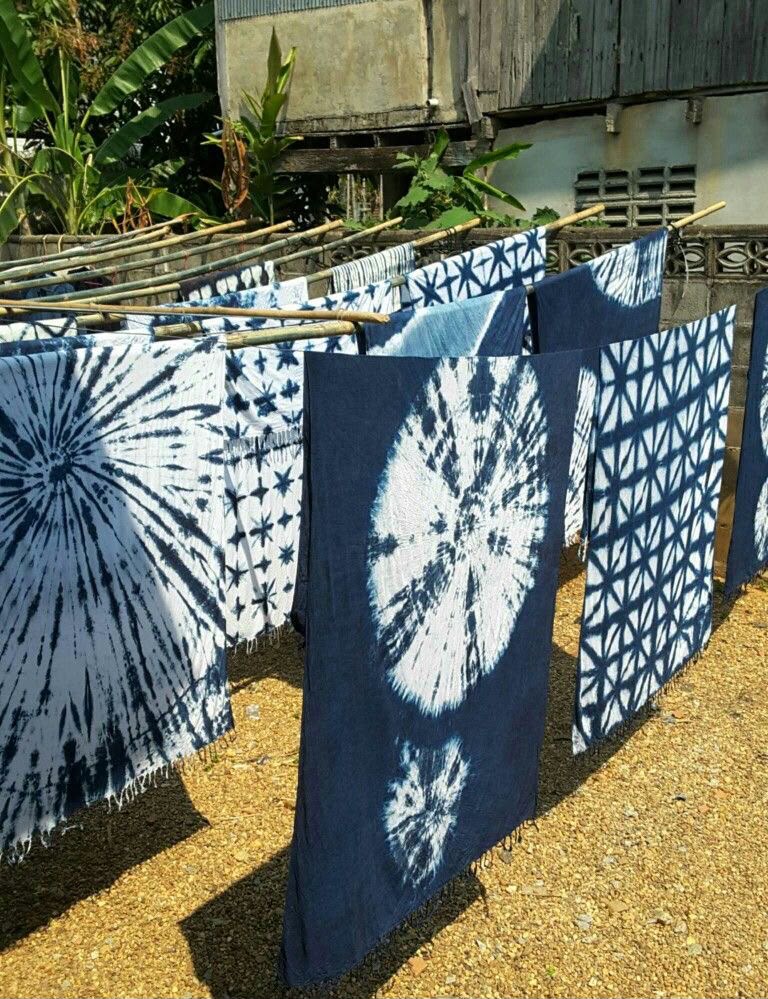
Among the most famous indigo textiles is àdìrẹ, a cloth associated with Yoruba communities in southwestern Nigeria.
Traditionally, it was produced and worn primarily by women in the Yoruba region.
The term àdìrẹ literally means “tied and dyed” in the Yoruba context, although the techniques used extend beyond tying alone.
PATTERNS THAT TELL A STORY
Àdìrẹ shows that indigo can become a graphic language.
The patterns can represent or evoke:
- geometric shapes;
- plants;
- animals;
- objects;
- architectural elements;
- symbols associated with a place or a story.
MALI AND THE MANDE TRADITIONS
Indigo also has a significant history in Manding regions.
Mali’s textile traditions are among West Africa’s great dyeing cultures.
Furthermore, Mali serves as a major historical center for the production and circulation of textiles.
NORTHERN NIGERIA: KANO AND ITS DYERS
Another narrative unfolds in the Hausa regions of northern Nigeria.
The city of Kano is historically linked to an important textile dyeing tradition.
Dyers notably worked in communal dyeing pits or basins.
INDIGO AS AN ECONOMIC ACTIVITY
Indigo was not just a matter of beauty.
It was also an economy.
In certain cities, dyeing activities were organized around specialized quarters or dedicated spaces.
INDIGO AND SOCIAL STATUS
In some West African societies, indigo-dyed textiles were associated with wealth, prestige, or specific occasions.
However, this association should not be generalized across all of West Africa.
An indigo textile could hold vastly different values depending on:
- its fabric;
- the amount of labor required;
- the technique used;
- the number of dye baths;
- the fineness of the weave;
- the patterns;
- the community;
- the context in which it was worn.
Color alone is therefore not enough to determine the status of a garment.
INDIGO AND COLONIALISM: A NEW ECONOMY OF COLORS
The history of West African indigo cannot be separated from the economic transformations tied to global trade and colonization.
European textiles and synthetic dyes gradually altered local markets.
Artisans continually adapted their practices to new materials and changing market demands.
WHEN INDIGO GOES GLOBAL
In the 20th century, certain West African indigo textiles expanded far beyond their original context.
Àdìrẹ, for instance, gained international reach. Starting in the 1960s, these fabrics were fashioned into garments and gained global visibility, particularly in the United States, where indigo tie-dye was adopted by the hippie counterculture.
INDIGO AND CONTEMPORARY AFRICAN CREATIVITY
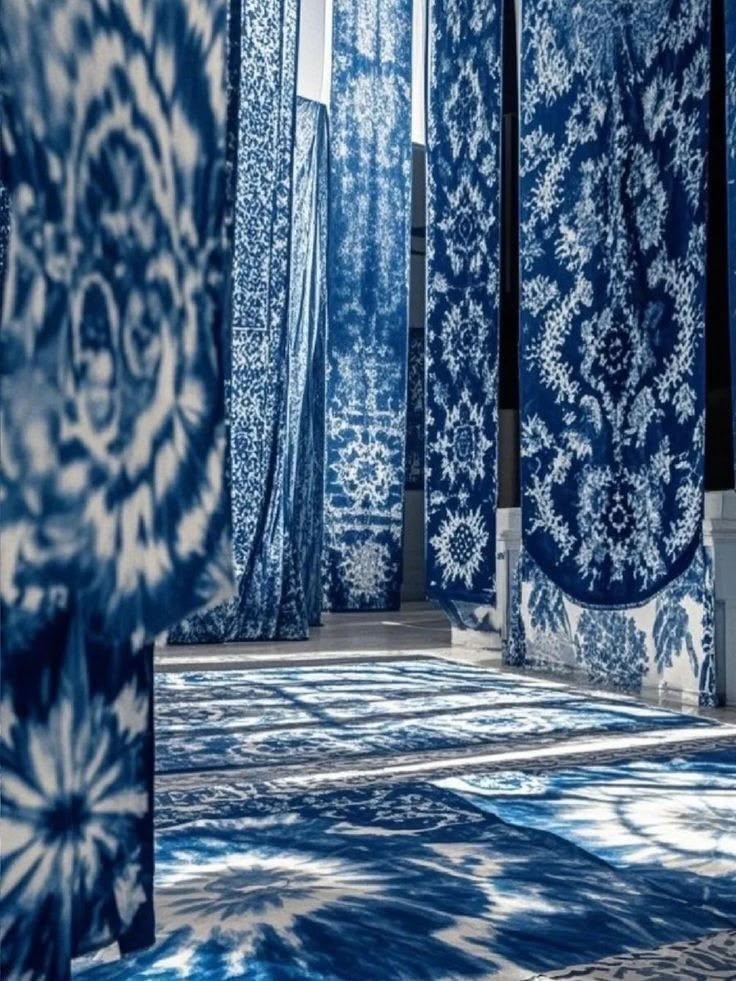
Today, indigo offers African designers a vast landscape for experimentation.
They can preserve:
- natural dyeing;
- resist techniques;
- weaving;
- traditional patterns;while reimagining:
- cuts;
- volumes;
- uses;
- silhouettes;
- material combinations.
Indigo in West Africa is far more than just a color: it is the memory of a gesture, a craft, and communities that, generation after generation, learned to transform a plant into a textile artwork. From Mali to Senegal, and from Nigeria to other lands across the region, its shades tell different stories, yet all bear witness to the richness of West African clothing cultures. Today, as indigo inspires designers and crosses borders, its future depends as much on its capacity to reinvent itself as on the preservation of the heritage knowledge that gives it meaning. Keeping indigo alive means safeguarding a memory while empowering new generations to write its next chapter.