
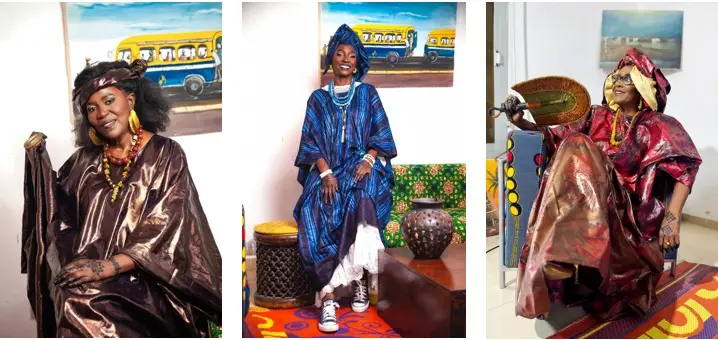
A new fashion event is coming to Dakar. Pont des Styles, a salon dedicated to intergenerational fashion, will take place from December 4 to 6, 2026, at Cinéma Pathé. Led by a collective of organizers including Mariama Soumaré and economist Awa Soumaré, this first edition aims to bridge traditional craftsmanship and contemporary creativity, while opening concrete commercial opportunities for Senegalese designers.
From December 4 to 6, 2026, Dakar will host a new fashion initiative: Pont des Styles. Held at Cinéma Pathé, the salon stands out for a distinct positioning — intergenerational fashion, conceived as a space for knowledge transfer between experienced designers and emerging talent, and as an economic development tool for the local industry.
A Bridge Between Generations and Know-How
The salon’s name is no accident. For Mariama Soumaré, one of its initiators, it reflects a conviction: fashion travels through time without ever standing still. “A bridge brings people closer and allows ideas, know-how and experiences to circulate,” she notes. The stated ambition is to connect traditional craftsmanship, contemporary creation, experience and youth, heritage and innovation, by bringing together designers aged 25 to over 50. According to the organizers, registrations currently show parity between younger and older participants.
This focus on transmission is also championed by co-organizer Awa Soumaré, an economist and founder of a development consulting firm. For her, the stakes go beyond aesthetics: the goal is to help Senegalese designers stand out in a globalized market by drawing more deeply on their heritage. “We’re in a globalized world, you have to show up with something,” she says, arguing for digging into local tradition to identify elements that could become true markers of Senegalese identity.
Letting Experience Flow Both Ways
This intergenerational logic is embodied by Mame Marie Seynabou Diop, founder of the artisanal brand Atelier B, for whom the salon’s value lies precisely in its ability to bring together two generations with complementary contributions. She stresses, however, that the exchange must run in both directions: while elders bring know-how and experience, she says the younger generation brings a great deal of talent, innovation, and a fresh perspective on what’s happening now — and has just as much to offer in return.
This philosophy will take concrete shape during the salon through an exhibition covering traditional dress, hairstyles and emblematic Senegalese figures, alongside panels dedicated to transmission. A mentorship program and pre-arranged meetings are also planned, allowing young designers to identify experienced professionals they can turn to for advice.
A Selection Focused on “Made in Senegal”
Access to the salon rests on specific criteria. The organizers rule out any imported merchandise from the outset: “It’s all made in Senegal. We don’t exhibit imported goods,” Mariama Soumaré states. Selection will be based on quality, originality, a designer’s potential, and the story told through their collections, with age serving as just one factor among others. Particular attention will go to young, less visible designers, with the stated goal of giving them access to contacts and professional opportunities beyond mere exposure.
A Deliberate Commercial Strategy
Beyond its heritage dimension, Pont des Styles positions itself as an economic tool for designers and exhibitors. The choice of Cinéma Pathé — a venue popular especially on weekends and located near several retail outlets — reflects this focus on commercial visibility. The timing was also chosen with the Dakar Biennale in mind, a period when the Senegalese capital draws an international crowd, toward which the salon’s communications will be directed.
The organizers say they have reached out to CEPEX to facilitate the arrival of potential buyers and partners. “Our approach is for it to be a win for every person who comes to take part in this event,” Mariama Soumaré sums up.
Fashion as an Industry to Be Structured
For the initiators, Senegal’s fashion and creative industries extend far beyond clothing — they represent an entire chain of trades and skills that now needs better structuring. “It’s a genuine industry that can generate income, create jobs and also showcase our heritage,” Mariama Soumaré argues.
By betting on the encounter between experience and innovation, Pont des Styles aims, in its first edition, to lay the groundwork for a lasting event — one where Senegalese heritage becomes a resource for contemporary creation rather than a simple object of memory.